No products in the cart.


Written by Nkeiru Agbarakwe
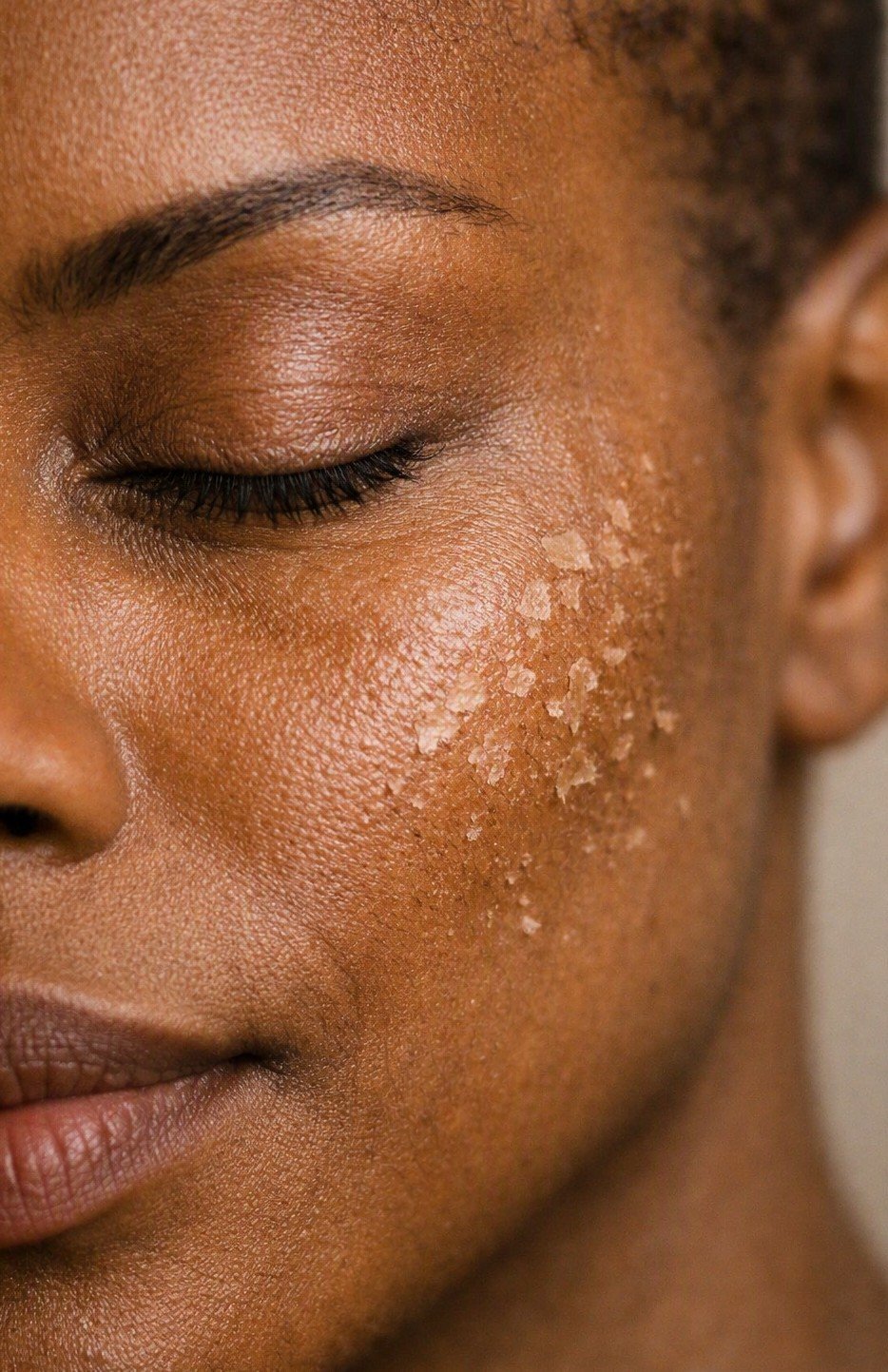
The moisture trap is one of the most common misunderstandings I see, both at the bedside and now in the messages Saccahra receives every week – the belief that if a cream feels rich, it must be restoring you. It isn’t always. Sometimes it’s just sitting there.
You cleanse, you layer your cream, you go to bed believing you’ve done the caring thing. And yet you wake up tight, or shiny, or somehow both, in different zones of the same face. You did the routine. The routine did not do the repair. That gap between effort and result is where I want to spend this piece.
What The Moisture Trap Actually Feels Like
Skincare ingredients tend to fall into three working categories, and the language matters more than it sounds like it should.
The moisture trap is that occlusion and genuine repair can feel identical in the first five minutes. Both leave skin soft to the touch. But an emollient works by filling the spaces between skin cells to smooth the surface, while also helping to genuinely repair the skin’s barrier function — it becomes part of the structure.
A purely occlusive layer does not. It’s a lid, not a rebuild. Take the lid off, and the underlying dehydration is exactly where you left it, sometimes worse, because the skin never had to do the compensating work itself. Overused or poorly formulated emollients can leave a heavy film that some people find uncomfortable, and can even contribute to clogged pores if they’re the only thing doing the work.

The Clock Behind The Moisture Trap
Here is the detail that changes how I think about an entire evening routine, and the piece that makes the moisture trap genuinely costly rather than just a minor inefficiency:
Skin permeability is not constant throughout the day. It rises at night. Research measuring skin barrier function across a full 24-hour span found statistically significant circadian rhythmicity in transepidermal water loss, skin surface pH, and skin temperature, meaning skin literally loses water at a different rate at 11pm than it does at 11am. The results suggest that skin permeability is higher in the evening and night than in the morning.
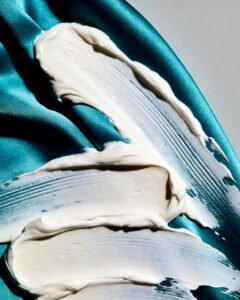
Put simply: skin is more open at night. More porous. More willing to absorb what you give it, and more vulnerable to losing what it already has. Aquaporin 3, a channel in the epidermis regulated by the body’s molecular clock, contributes directly to this nightly rise in water loss, and skin cell repair from UV exposure has been shown to peak at night, which is part of why researchers suggest topical products may offer increased benefit when timed to the evening hours specifically. So skin is doing two things simultaneously while you sleep – repairing itself, and leaking water faster than at any other point in the day.
A purely occlusive layer asks the skin to do intensive overnight reconstruction while fighting a faster leak, with no new materials to rebuild with. It’s a bit like patching a roof during the heaviest hour of rain, using a tarp instead of shingles.

Who The Moisture Trap Affects Most
Oily skin at night is where I see the moisture trap do the most quiet damage. Oil production isn’t the enemy – dehydration is often the trigger. When skin loses water faster than it can hold onto it, it compensates by producing more oil, which is why oily skin can wake up shiny and feel tight underneath.
Combination skin faces a quieter version of the same problem, in zones — the T-zone overcompensates with oil while the U-zone dries out and turns reactive, and a single uniform occlusive layer treats two very different physiological states as though they were one.
Depleted or overworked skin has even less margin for a product that doesn’t do real structural work. A study on one night of sleep deprivation alone found a significant decrease in skin hydration and impaired barrier function in otherwise healthy participants, measured the very next day — a finding I explored more fully in The Silent Sleep Debt. If sleep debt alone can measurably weaken the barrier overnight, a layer that only masks rather than replenishes is compounding a deficit that’s already there.
Formulating Against The Moisture Trap
This is the entire premise behind why Saccahra formulates for night specifically, not just for “moisture”. The goal isn’t to coat depleted skin, it’s to meet it at the one point in its cycle when it’s actually rebuilding.
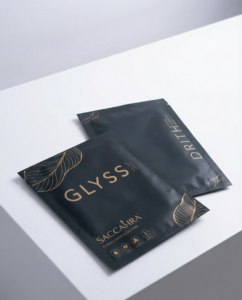
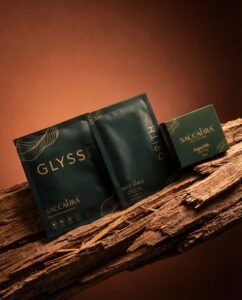
A hydrating step first, while skin is still slightly damp, gives water something to bind to. A restorative night layer — SugarVelvet for zone-specific combination skin, or SugarSilk for oil-prone skin — replenishes lipids rather than simply sealing the surface. A recovery mask like DRITH or GLYSS meets the nights skin needs deeper structural support, not just a hydration top-up.
None of this is about adding more steps — it’s the same conviction behind The Dangerous Skincare Gap: choosing the right kind of step for what skin is actually doing at that hour, rather than accumulating more of the wrong kind.
The Quiet Takeaway
Skincare doesn’t need to be complicated to be effective, but it does need to be understood. Skin isn’t asking you to do more. It’s asking to be met on its own terms, at the hour it’s most open, with materials it can actually use, not just a layer it has to sit underneath.
If the moisture trap sounds like something your own routine has fallen into, I’d encourage you to look past how rich a product feels and toward what it’s actually giving skin back. Explore Saccahra’s restorative range, formulated to meet skin at the hour it’s genuinely ready to rebuild.
Further reading (external sources referenced)
– Circadian Rhythm and the Skin: A Review of the Literature — Journal of Clinical and Aesthetic Dermatology
– Time-Dependent Variations of the Skin Barrier Function in Humans — ScienceDirect / Journal of Investigative Dermatology
– Difference Between Humectant, Emollient, and Occlusive — The Dermatology Review
FAQ
Is a thicker cream always more hydrating?
No. Thickness often comes from occlusive ingredients that seal moisture in rather than replenishing the lipids skin has lost. A thinner formula rich in ceramides or squalane can restore the barrier more effectively than a heavy one that only coats it.
Why does my skin feel worse in the morning even after moisturising at night?
Skin loses water faster overnight due to a natural rise in permeability. If the product used only sits on the surface rather than replenishing barrier lipids, that overnight water loss continues underneath it
Does oily skin need a rich night cream?
Often, yes but the right kind. Oily skin at night is frequently dehydrated rather than over-moisturised, and a lightweight, lipid-replenishing formula can calm oil production more effectively than a stripping or mattifying one.