No products in the cart.

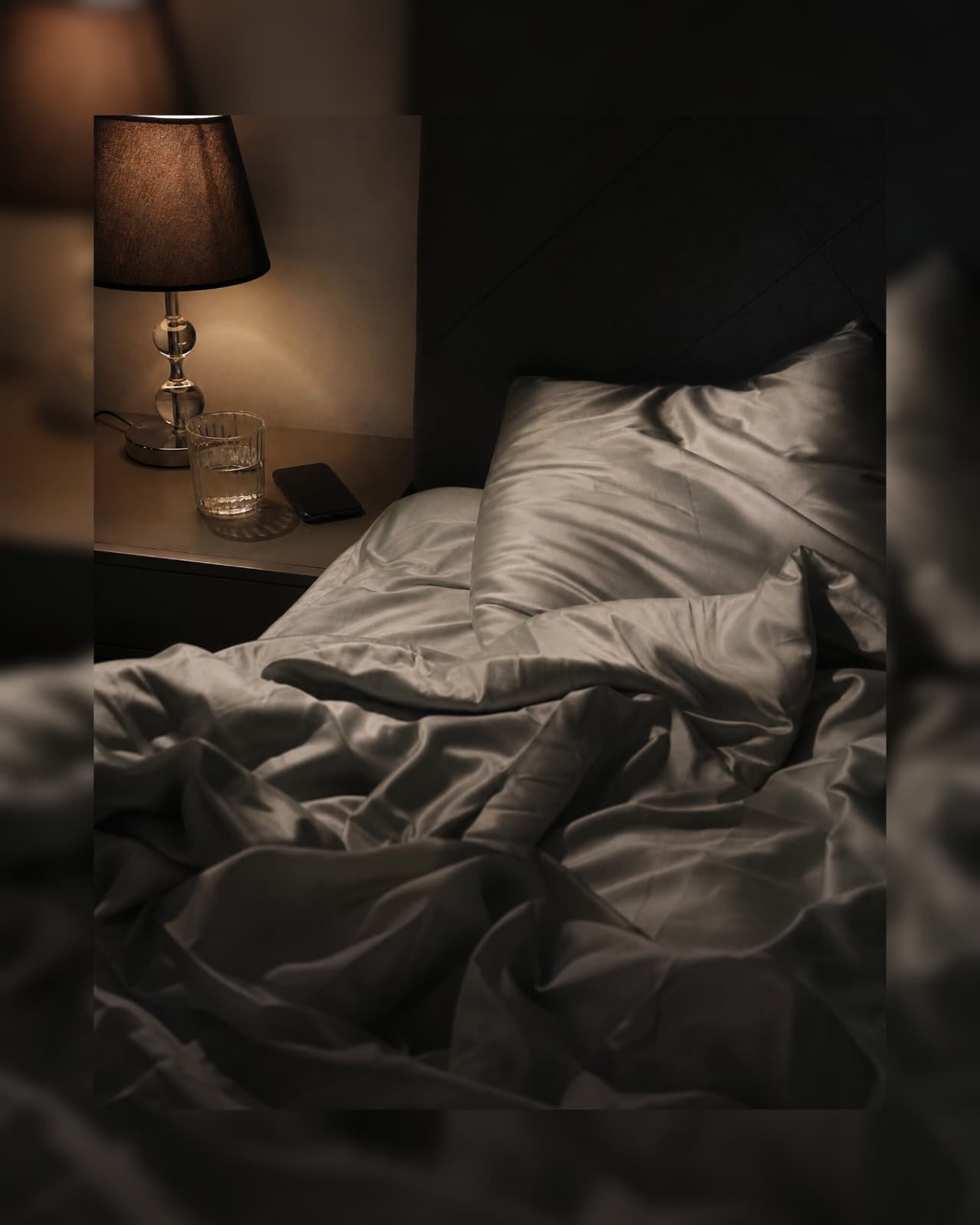
The silent sleep debt is one of the first things I learned to recognise as a nurse, long before I understood its full biological cost. You develop an eye for it quickly on a ward — the particular greyness of a face that hasn’t had enough real rest in days, the puffiness that no amount of concealer quite hides, the way skin simply stops looking like it’s keeping up. I used to think of it as a side effect of a hard week. I’ve since learned it’s closer to an actual, accumulating deficit, one the body keeps a running total of, whether or not you’re paying attention.
This is the piece where skincare and sleep finally meet directly in this Journal, because I don’t think they were ever really separate conversations. Rest, for Saccahra, was never only about the seconds you spend applying a product slowly. It’s about what happens in the hours after, while you’re asleep or not.
What The Silent Sleep Debt Does to Your Skin
This isn’t a vague wellness claim. Sleep deprivation increases cortisol release through the hypothalamic-pituitary-adrenal axis, and even a single night of lost sleep can compromise the skin barrier’s stability. Elevated cortisol inhibits fibroblast function and increases the enzymes that break down collagen and elastin: accelerating wrinkles, decreasing skin thickness, and reducing elasticity over time.
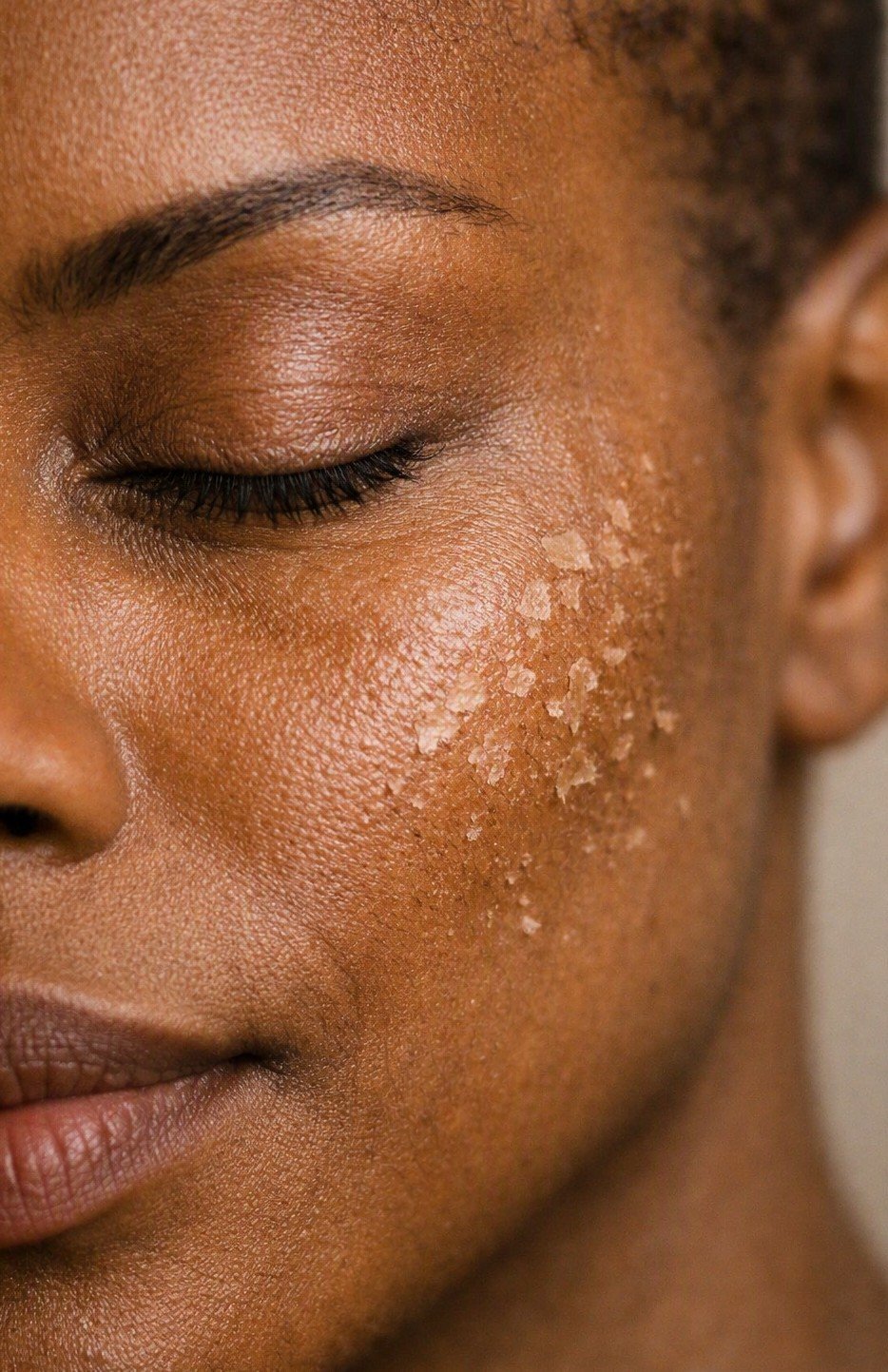
The silent sleep debt doesn’t announce itself as dramatically as a bad reaction to a product might. It shows up quietly instead — as dullness, as puffiness that lingers, as a face that looks tired even when you don’t feel especially tired yourself. Dark circles, puffy eyes, hollow cheeks, and dull skin often reflect sleep debt and stress hormone imbalances that disrupt tissue repair and the skin’s circadian rhythm, and these signs tend to become more pronounced the longer someone regularly gets less than the sleep their body actually needs.

How The Silent Sleep Debt Builds Without You Noticing
What makes this genuinely dangerous, clinically, is how invisible the accumulation is. Sleep disruption impairs the body’s activation of collagen production, cellular repair, growth factor release, keratinocyte proliferation, wound healing, and skin permeability — all processes that are supposed to happen automatically overnight, without you doing anything at all except sleeping. When that window is cut short, night after night, none of that repair work gets cancelled outright. It simply doesn’t finish.
Bidirectional relationships have been established between sleep and several inflammatory skin conditions, including eczema, psoriasis, and rosacea — meaning the silent sleep debt doesn’t just affect how skin looks, it can actively worsen conditions many people are already trying to manage with products alone, without ever addressing the sleep side of the equation.
Why The Silent Sleep Debt Belongs in a Skincare Conversation
I think this is the honest gap in most skincare conversations: we talk endlessly about what to apply, and almost never about the conditions under which skin is supposed to do its actual repair work. Chronic sleep debt increases cortisol production, the body’s primary stress hormone, which places genuine physiological strain on the body well beyond how skin simply looks. No serum, however well-formulated, can fully compensate for a body that isn’t being given the uninterrupted rest it needs to carry out its own repair processes.
This is why the silent sleep debt deserves a place in this Journal, not as a side note, but as its own category. It’s the same underlying belief that shaped every skin piece I’ve written — that the body does better when it’s supported, not corrected — extended to where it was always eventually going to lead: rest itself.

What Repaying The Silent Sleep Debt Actually Looks Like
I won’t pretend there’s a formula for this the way there is for skin. Rest doesn’t respond to a product. But there are a few honest, unglamorous things that genuinely help: protecting a consistent sleep window rather than only chasing total hours, treating the wind-down before bed as part of the repair process rather than dead time before it, and something I’ve written about before understanding that the way you spend those final minutes before sleep, unhurried rather than rushed, seems to matter for the nervous system too, not just the clock. I explored that idea more fully in The Quiet Touch Deficit, which sits closely beside this piece.
What This Means Tonight
If your skin has looked tired in a way that doesn’t quite match how rested you feel, it may be worth asking a different question than “what am I missing from my routine.” It may be worth asking what your sleep has actually looked like this week, and whether your skin is simply reporting back on a debt that has nothing to do with any product at all.
If the silent sleep debt sounds like something you’re carrying, I’d gently suggest starting with rest itself before reaching for anything new. In the meantime, explore Saccahra’s restorative range, formulated to support skin’s own overnight repair, not replace the sleep it still needs to do that work.
By Nkeiru Agbarakwe
Further reading
• Beauty Sleep: Sleep Deprivation and the Skin — MDedge
• Why Face Depletion Predicts Sleep Quality: The Science of Rest — Ubie Health
• Sleep Debt and Deprivation: The Overlooked Health Crisis Science Can’t Ignore — Medical Daily
• Sleep Deprivation Skin Aging Study Facts — Liv Hospital
FAQ
What is “the silent sleep debt”?
It refers to the cumulative physiological cost of chronic, insufficient sleep — an accumulating deficit that raises cortisol, impairs skin barrier repair, and accelerates visible signs of aging, often without the person feeling consciously “tired.”
Can lack of sleep really affect skin the way skincare products do?
Yes — research on the sleep-skin axis shows that sleep deprivation directly impairs collagen production, cellular repair, and barrier function, and can worsen inflammatory skin conditions like eczema and psoriasis, independent of what products are being used.
How does this connect to Saccahra’s philosophy?
Saccahra’s core belief — that the body does better when supported rather than corrected — extends beyond skin to rest itself. This is the first Journal piece exploring that connection directly, as Saccahra’s focus grows to include rest and sleep alongside skin.