No products in the cart.

Written by Nkeiru Agbarakwe
The quiet collapse of perfection culture is not a trend I read about before I lived inside it. I watched it happen twice, in two very different rooms – once at a hospital bedside, and once in my own bathroom mirror, years before Saccahra existed. Nursing didn’t teach me to see skin as something to fix. It taught me to see skin as something to support – a living, working organ with its own intelligence, not a surface waiting to be corrected into someone else’s idea of flawless.
That distinction sounds small. I don’t think it is. I think it’s the exact shift the entire beauty industry is now, slowly and somewhat reluctantly, being pulled toward.
Nursing puts you in front of skin at its most honest. Not styled, not filtered, not photographed at a flattering angle – skin that is healing, skin that is under stress, skin that is simply trying to do its job under difficult conditions. You stop asking “how do I make this look perfect” very quickly in that setting, because the question stops making sense. You start asking “what does this need to function well again.”
I carried that question with me when I left the ward each day, and eventually into the formulation of every Saccahra product. The quiet collapse of perfection culture, as I’ve come to think of it, is really the slow return of that same question to an industry that spent decades asking the wrong one.

The Data Behind The Quiet Collapse of Perfection Culture
This isn’t just something I’ve felt anecdotally — the numbers now back it clearly. Mintel’s “Human Touch Revolution” prediction specifically identifies authenticity over perfection as a defining shift, noting that consumers are done with hyper-retouched beauty, and that brands are increasingly showing real people, real stories, and imperfections rather than only polished results. Industry reports for 2026 point to a growing shift toward “skinimalism” – a philosophy built around fewer, more effective products, driven in large part by consumers who are simply exhausted after years of complicated routines, endless launches, and constant experimentation.
The aesthetic language has changed too. Beauty in 2026 has stopped performing for perfection and relaxed into something closer to personality – skin looks like skin again, and the obsession with doing the most has visibly started to fade. Even at the level of formulation science, the category is moving away from reactive, symptom-focused products toward formulations that address how skin actually functions at a biological level, with barrier health becoming the defining ingredient story of the year. What I once only sensed at a bedside now has a name in market research: the quiet collapse of perfection culture.

Why The Quiet Collapse of Perfection Culture Needed to Happen
I don’t think this shift is cosmetic, and I don’t think it happened by accident. Industry insiders now widely expect 2026 to favour brands that are transparent, grounded in real results, and focused on long-term skin health rather than noise or novelty, and I’d go further: I think perfection, as a standard, was never actually compatible with how skin works biologically.
Skin is not meant to be static. It changes with stress, hormones, seasons, sleep, and age – asking it to hold a single flawless state indefinitely was always going to demand more correction, more intervention, more products, and more disappointment than any routine could sustainably deliver. The quiet collapse of perfection culture isn’t beauty giving up on itself. It’s beauty finally asking something biologically honest of skin, instead of something impossible.
Building Saccahra Inside The Quiet Collapse of Perfection Culture
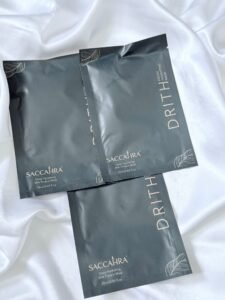
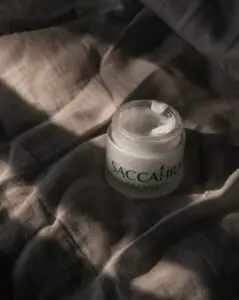
This is, I’ll admit plainly, exactly the space I built Saccahra to occupy – not chasing the industry’s next correction-based trend, but building formulations and a philosophy rooted in support rather than fixing, well before that language became fashionable to use. DRITH and GLYSS were formulated to replenish, not correct. SugarVelvet and SugarSilk exist to restore balance to skin’s own function, rather than mask what it’s currently doing. You can read more about the full reasoning behind that approach on The Saccahra Effect.

This piece sits alongside two others I’ve written that circle the same idea from different angles: The Dangerous Skincare Gap looks at what accumulation costs the skin, The Exhausted Skin Epidemic looks at what constant switching costs its capacity to repair, and The Quiet Touch Deficit looks at what slow, intentional touch gives back. Together, I think they describe the same conviction from three different directions: that skin does better when it’s supported, not managed.
What This Means for the Way You Approach Your Own Skin
Balance isn’t a lower standard than perfection. In many ways, it’s a harder one to hold, because it asks you to trust a process rather than control an outcome – to let skin do what it already knows how to do, instead of overriding it at every turn.
This is the same idea I first explored in 3 Centimetres a Second – touch as its own form of care, separate from the formula. If you’d like to see how it connects to everything else I’ve written, The Saccahra Way is a good place to start.
If the quiet collapse of perfection culture resonates with where you already are in your own routine, I’d invite you to explore Saccahra’s full restorative range – built not to correct your skin into someone else’s idea of flawless, but to support it in becoming, quietly and steadily, more itself.
Further reading (external sources referenced)
FAQ
What is “the quiet collapse of perfection culture”?
It refers to the ongoing industry-wide shift away from correction-based, perfection-focused beauty standards toward formulations and philosophies centred on supporting skin’s own function and balance, evidenced by 2026 trends like skinimalism and mechanism-driven skincare.
Is this shift supported by real industry data, or is it just a wellness trend?
It’s backed by current market research – Mintel’s 2026 predictions specifically cite authenticity over perfection as a defining direction, and multiple industry analyses point to consumers moving toward fewer, more functional products focused on long-term skin health.
How does Saccahra reflect this shift?
Saccahra was built around restoring skin’s own function and balance rather than correcting its appearance – a philosophy shaped directly by the founder’s nursing background, well before “restorative beauty” became an industry-wide term.

3 Responses