No products in the cart.


Skin You Think You Have Vs The Skin You Actually Have: The Misdiagnosis Behind Modern Skincare.
Written by Nkeiru Agbarakwe

The Skin You Think You Have is often a story shaped by trends, assumptions, and years of misdiagnosis. The Skin You Actually Have is a living, reactive organ responding to biology, environment, stress chemistry, and overstimulation. Most people treat the first and neglect the second. This misunderstanding is the root of chronic dullness, breakouts, sensitivity, and barrier damage. And it is the blind spot Saccahra was created to correct.
What most people don’t realise is that this misunderstanding begins early, often in adolescence — when the first breakout or dry patch becomes a lifelong identity. People carry these labels into adulthood, never questioning whether their skin has changed, adapted, or evolved. The Skin You Think You Have becomes a fixed narrative, even when the skin itself has been communicating new needs for years. This disconnect is why so many routines fail: the products are chosen for an outdated identity, not the skin that exists today.

The Skin You Think You Have
Most people confidently identify their skin type — but research shows self‑diagnosis is highly unreliable. Did you know that over 60% of consumers misdiagnose their skin type? According to an international consumer study published by Cosmetics Business, 2 in 3 women are actively damaging their skin through improper product selection. This mismatch leads to inappropriate product use, cosmetic misuse, and long-term barrier disruption. Read the full study breakdown via Professional Beauty News to see how you can protect your skin barrier.
This misdiagnosis is reinforced by social media, where skin categories are oversimplified into aesthetic goals: “glass skin,” “matte skin,” “poreless skin.” These trends encourage people to chase finishes rather than understand function. The result is a generation of consumers who believe their skin is failing them, when in reality, they are simply treating the wrong thing.
Below are the five most common misdiagnosed “skin identities” — each one contributing to the global confusion around the Skin You Think You Have.
Oily Skin (Misdiagnosed)
Most “oily skin” is actually dehydrated skin producing compensatory oil. When the barrier is compromised, the skin increases sebum production to protect itself.
Dry Skin (Misdiagnosed)
Often not true dryness — but a damaged barrier leaking moisture faster than it can retain it.
Sensitive Skin (Misdiagnosed)
Usually not genetic sensitivity — but sensory overstimulation from excessive actives, frequent exfoliation, and trend‑driven routines.
Combination Skin (Misdiagnosed)
Often simply imbalanced skin reacting to inconsistent routines, fluctuating hydration, and environmental stress.
Acne‑Prone Skin (Misdiagnosed)
Frequently not acne‑prone — but inflamed skin triggered by lifestyle, stress chemistry, or barrier disruption.

The Skin You Actually Have
The Skin You Think You Have is a label.
The Skin You Actually Have is a behaviour.
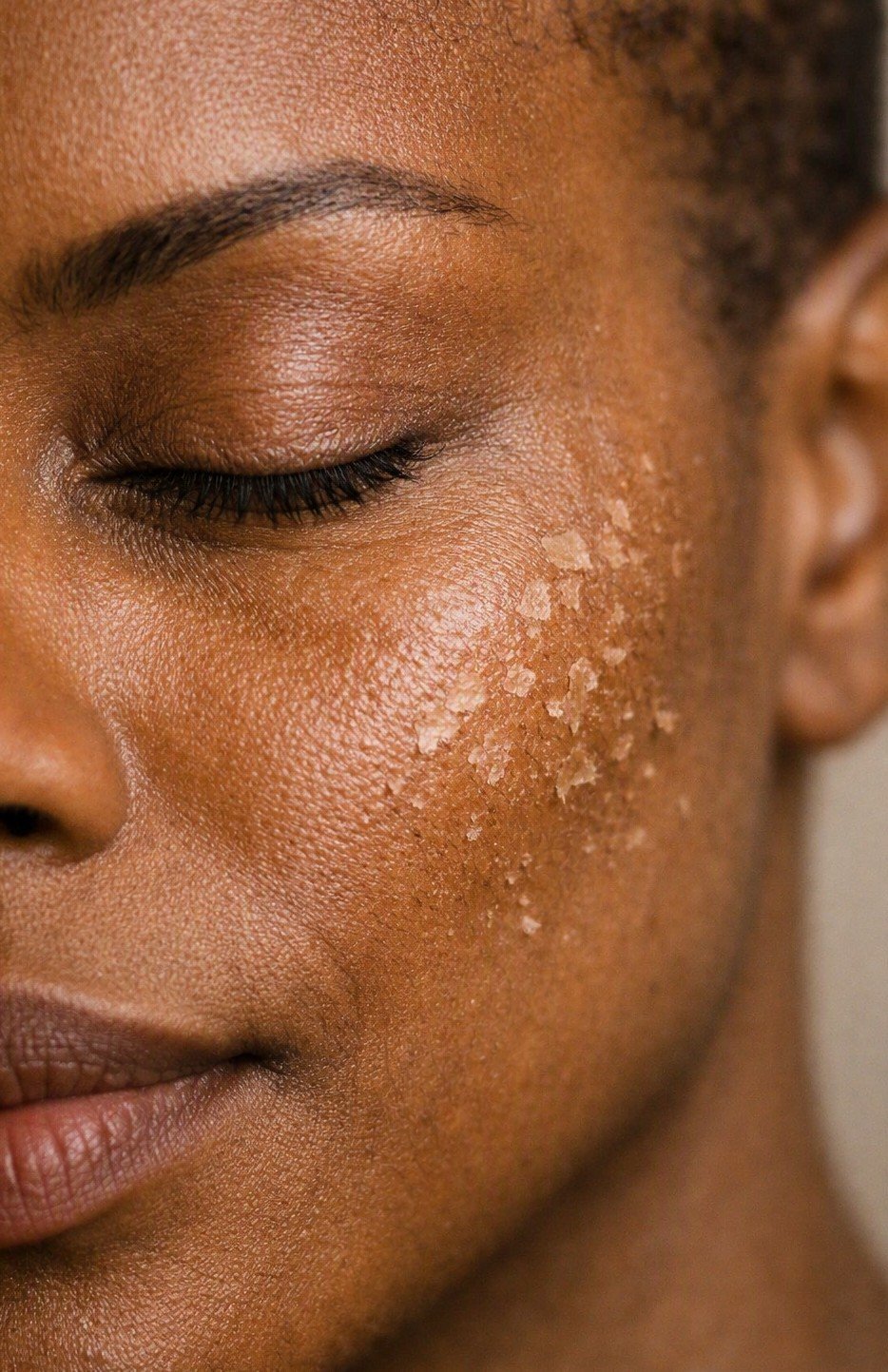
Real skin is dynamic. It shifts with seasons, hormones, stress levels, sleep quality, and environment. It communicates constantly – through texture, oil flow, hydration levels, inflammation, and sensitivity. But because people are taught to focus on appearance rather than behaviour, these signals are often ignored. The skin becomes louder, more reactive, more unpredictable, not because it is “problematic,” but because it has been misunderstood.
Skin behaves according to:
● Barrier strength
● Sebum intelligence
● Inflammatory load
● Sensory overstimulation
● Environmental exposure
● Nervous system chemistry
Real Skin Behaves Like This
● It gets oily when it’s dehydrated.
● It gets dry when its barrier is compromised.
● It gets sensitive when overstimulated.
● It gets dull when repair cycles are interrupted.
● It breaks out when inflammation outweighs resilience.
● It becomes unpredictable when routines are inconsistent.
This is the Skin You Actually Have – and it requires restoration, not aggression.
The Blind Spot the Beauty Industry Created
The industry taught people to chase outcomes: glow, matte, poreless, glass, flawless.
But Saccahra teaches people to understand origins:
Why does your skin behave this way?
What is it protecting you from?
What is it trying to tell you?
Your skin is not trying to look good.
Your skin is trying to survive.
Every oil surge, dry patch, flare, or breakout is a survival response, not a cosmetic failure. This is the turning point — the moment someone stops fighting their skin and starts supporting it.

How Saccahra Restores the Skin You Actually Have
Saccahra’s formulations were built for real skin behaviour, not labels.
● Glyss
Supports overstimulated, inflamed, reactive skin.
Internal link placement:
● Drith
Restores moisture balance and calms micro‑stress.
● SugarSilk
Supports oily skin that is actually dehydrated.
● SugarVelvet
Stabilises combination skin that is actually imbalanced.
The Moment of Realisation
When someone finally understands the difference between the Skin You Think You Have and the Skin You Actually Have, three things happen:
They stop buying random products.
They stop damaging their barrier.
They become loyal to the brand that told them the truth.
This is why Saccahra stands out globally.
This is why people return, read, share, and stay.
Because Saccahra doesn’t just sell skincare – it teaches people to see their skin clearly for the first time.
Misdiagnosing your skin type is only part of the story. If you want to understand the deeper pattern behind why routines stop working even when every product seems “right,” The Dangerous Skincare Gap picks up exactly where this leaves off.







One Response